
Lot clearing plays a direct role in how well a home is built, how it functions, and how long it lasts. Before construction begins, the condition of the land determines everything from foundation stability to drainage and overall layout. Understanding how lot clearing affects these factors helps homeowners and builders make smarter decisions early in the process.
What Is Lot Clearing and Why It Matters
Lot clearing is the removal of trees, brush, rocks, and debris to prepare land for construction. It is the first physical step in transforming raw land into a buildable site.
Without proper lot clearing, construction can face delays, structural risks, and long-term performance issues.
For new construction, lot clearing creates a clean and workable surface that allows builders to evaluate soil conditions accurately. This step improves safety on-site and helps ensure construction plans align with the land’s actual characteristics. Clearing also allows crews to identify problem areas early, such as unstable soil or drainage concerns.
Environmental responsibility is another key consideration. Thoughtful lot clearing can reduce damage to surrounding ecosystems by preserving valuable trees, minimizing erosion, and managing debris responsibly. Many projects require permits, and local regulations often dictate how land can be cleared. Securing approvals before work begins helps prevent fines and project delays.
How Lot Clearing Affects Your Home’s Foundation
The foundation of a home depends heavily on what happens during lot clearing. Soil preparation is one of the most critical outcomes of this process. Once vegetation is removed, builders can assess soil composition and make adjustments to support the weight of the structure. Proper soil preparation reduces the risk of future settling or shifting.
Water management is another major factor. Removing trees and vegetation changes how water flows across a site. Without proper planning, this can lead to pooling, erosion, or moisture buildup near the foundation. Effective drainage solutions, installed during or immediately after lot clearing, help protect the foundation from water-related damage.
Root removal must also be handled carefully. Large root systems left underground can decay over time, creating voids that compromise soil stability. Professional lot clearing ensures roots are removed or managed in a way that maintains consistent soil support beneath the foundation.
Layout Implications of Lot Clearing
Lot clearing directly influences how a home is positioned and designed. A properly cleared site allows builders to maximize usable space and align the home with zoning requirements, setbacks, and design goals. It also enables more efficient placement of driveways, utilities, and outdoor features.
Landscaping plans often start during the clearing phase. Clearing too aggressively can remove valuable natural features, while selective clearing preserves trees or terrain that add character and value. Early coordination between builders and landscapers results in a more cohesive final design.
Topography plays a major role in layout decisions. Managing slopes and elevation during lot clearing helps control erosion and ensures the home sits on stable ground. Proper grading supports both structural integrity and long-term drainage performance.
Costs Associated With Lot Clearing
Lot clearing costs vary based on land size, vegetation density, terrain, and accessibility. Heavily wooded or rocky lots often require specialized equipment, which can increase costs. However, cutting corners during clearing often leads to higher expenses later through repairs or redesigns.
Some homeowners consider DIY clearing to save money, but this approach carries risks. Without the right equipment and expertise, DIY clearing can damage soil structure or overlook drainage needs. Professional services typically cost more upfront but deliver efficiency, compliance, and better long-term outcomes.
Insurance coverage is another consideration. Proper coverage protects against accidental damage or liability during clearing activities, providing added peace of mind throughout the project.
Choosing the Right Lot Clearing Service
Selecting an experienced provider is essential. Look for contractors with local experience, proper licensing, and a clear understanding of environmental and soil conditions. Reviews and referrals offer insight into reliability and workmanship.
Before hiring, ask about timelines, equipment, insurance, and post-clearing services such as grading or debris removal. Review contracts carefully to understand scope, guarantees, and responsibilities. Comparing multiple quotes helps ensure fair pricing and informed decision-making.
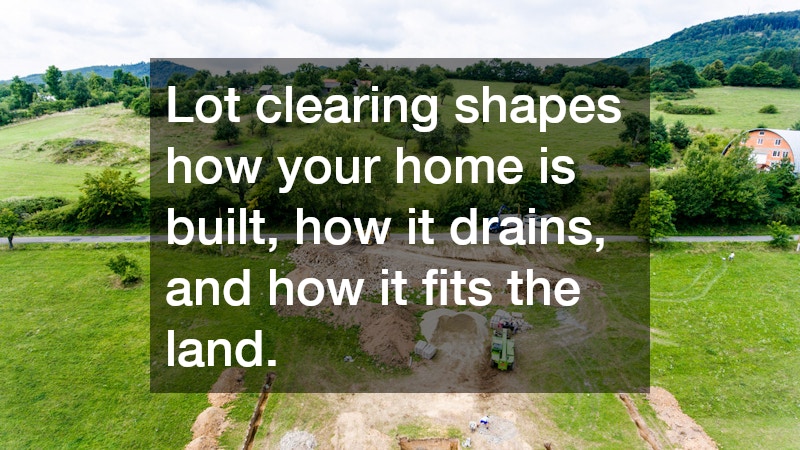
Lot clearing is far more than site cleanup. It shapes how your home is built, how it drains, and how it fits the land. When handled correctly, lot clearing supports a stable foundation, an efficient layout, and fewer long-term issues. Investing time and resources into proper clearing sets the stage for a stronger, more successful build.